
what Is Cloud Computing?
Cloud computing is the delivery of computing services—such as servers, storage, databases, networking, software, and analytics—over the internet (“the cloud”). Users can access these services anytime, anywhere, without managing physical hardware.

Types of Cloud Computing
1. Public Cloud
Services provided over the internet by third-party providers like AWS, Google Cloud, and Microsoft Azure.
2. Private Cloud
Dedicated cloud infrastructure used by a single organization for better control and security.
3. Hybrid Cloud
A combination of public and private clouds that allows data and applications to be shared between them.

Challenges of Cloud Computing
- Internet dependency
- Data privacy concerns
- Downtime risks
- Limited control in public cloud

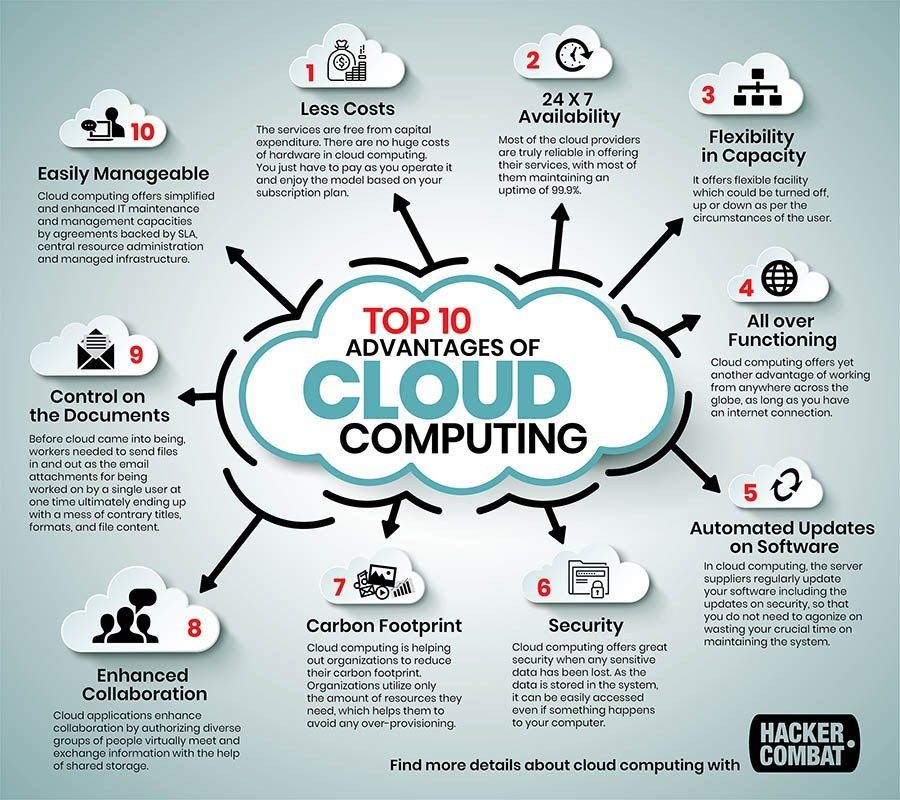
Benefits of Cloud Computing
- Cost savings (no hardware investment)
- Scalability and flexibility
- Data backup and disaster recovery
- Remote access from anywhere
- High security and reliability
- Automatic updates and maintenance
Cloud Computing for Businesses
Businesses use cloud computing to improve efficiency, reduce costs, and scale operations quickly. It supports remote work, secure data management, and faster deployment of services.

Cloud Service Models
IaaS (Infrastructure as a Service)
Provides virtual servers, storage, and networking.
PaaS (Platform as a Service)
Offers a platform for developers to build and deploy applications.
SaaS (Software as a Service)
Delivers software applications through the internet (e.g., Gmail, Dropbox)
The Future of Cloud Computing
Cloud computing will continue to grow with AI integration, edge computing, serverless architecture, and enhanced cybersecurity. It is becoming the backbone of digital transformation across industries.